Doctor of Nursing Practice (DNP)
Where evidence drives practice innovations
Lead in Your Nursing Practice
The UW–Madison School of Nursing believes in empowering nurses to lead and innovate. Our Doctor of Nursing Practice program provides the education and resources you need to excel in advanced practice nursing.
Whether you’re interested in nurse leadership, advocacy, or education, our program will help you achieve your goals and make a lasting impact on the health care system.
Priority Application Window: September-December 1
Applications accepted through February 15
DNP Points of Pride
100%
of clinical placements arranged for you
100%
APRN certification pass rates
#1
DNP program in Wisconsin
Yes, we offer funding support—here’s how!
Our DNP Tracks
At the UW–Madison School of Nursing, we encourage nurses to act on their passion and experience to explore scholarly inquiry in their population of interest. Our clinical faculty and DNP students innovate teaching, share advancements in evidence-based practice, and create systems change.
Adult-Gerontology Acute Care (Hybrid)
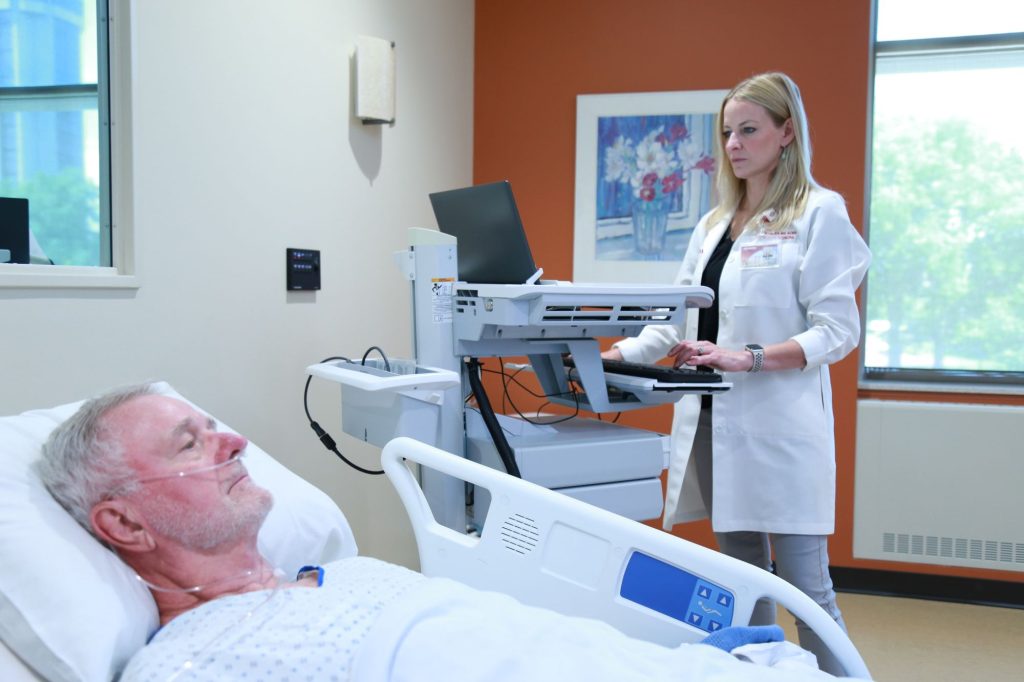
You will focus on adult and older adult patients with complex acute, acute on chronic illness, and those requiring surgical, procedural, or specialty care management.

Adult-Gerontology Primary Care (Hybrid)
You will focus on holistic patient-centered care for individuals from age 13 through the lifespan and develop clinical expertise to step into a high-demand role and directly improve patient outcomes in urban and rural health care systems.
Pediatric Primary Care (Hybrid)
You will deliver care to patients from birth through age 21 in diverse settings, including primary care clinics, specialty practices, and school-based health centers. You will develop strong clinical and leadership skills to drive change in pediatric health care.


Psychiatric Mental Health (Hybrid)
You will focus on caring for people who live with mental health symptoms across the lifespan. You will build a strong foundation in social justice as you work to reduce disparities and address mental health provider shortages in underserved areas.
Population Health (Online)
You will focus on providing the bridge between epidemiological data and the community’s lived experience of illness and health. You will also conduct population and community assessments to understand and design systems-level programs.


Systems Leadership and Innovation (Online)
You will prepare for a variety of leadership roles. Through learning and applying human-environmental-systems factors in leadership and innovation, you will develop skills and networks in health care systems change, innovation, and effective nurse leadership.
What are the in-person expectations of our hybrid programs?
Our DNP is a flexible program designed for adults with busy lives. Our hybrid programs have in-person classes one to two Tuesdays per month. Only one semester has classes every Tuesday. Attend an info session or request information to learn more.

“UW–Madison finds preceptors for students, which is a huge advantage since other schools don’t always do that. They have students being delayed graduation because they can’t find a preceptor, but they won’t have that problem if they go to UW–Madison.
Why a Doctor of Nursing Practice May Be Right for You
Thinking about your next step in nursing?
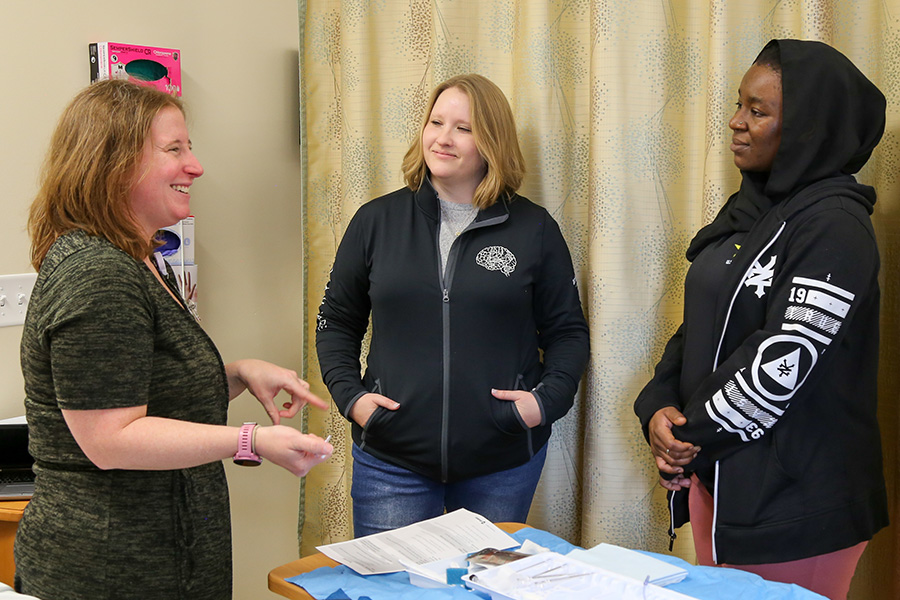
The doctor of nursing practice (DNP) degree helps you become a strong nurse leader, specialize in patient care, and drive systems change in health care. Whether you’re passionate about whole-person care, want to work independently, or are ready to influence policy and practice, the DNP path gives you the tools to do it
Program Highlights

Hybrid or Online delivery
Designed for adults with busy schedules, our DNP programs can be completed in 2-4 years.

Personalized Mentorship & Professional Support
Our experienced faculty provide tailored mentorship with diverse, real-world experiences.

Clinical Placement Support
Our clinical placement staff and faculty work to find clinical practicum experience tailored to students, so you don’t have to.

This program connects the dots for current leaders, future leaders, and career advancement.
Advance Practice Badger Nurses in Action
View Testimonials from DNP Students and Alumni
The UW–Madison School of Nursing has a reputation for excellence. DNP students learn from experts in the field and gain the skills and confidence needed to make quality health care improvements. Listen to stories from our DNP students and alumni who share their experiences here at the UW–Madison School of Nursing.
-

System Change Begins with You: Joshua Hermsdorf’s Decision to Lead
From farm kid to nurse leader, Joshua Hermsdorf is devoted to transforming systems and elevating patient care.
-

Nurse Advocacy for Better Policies and Better Health
Laura Vergenz, BSN, RN, a graduate student in the systems leadership and innovation track of the UW–Madison School of Nursing’s Doctor of Nursing Practice program, is a strong advocate for older adults.
-
From Battlefield to Clinic: Brenda Coupar’s Path from Combat Lifesaver to DNP
Brenda Coupar ’09, DNP’18, knows the true meaning of service. “I didn’t choose nursing. Nursing chose me,” she says.
You belong here
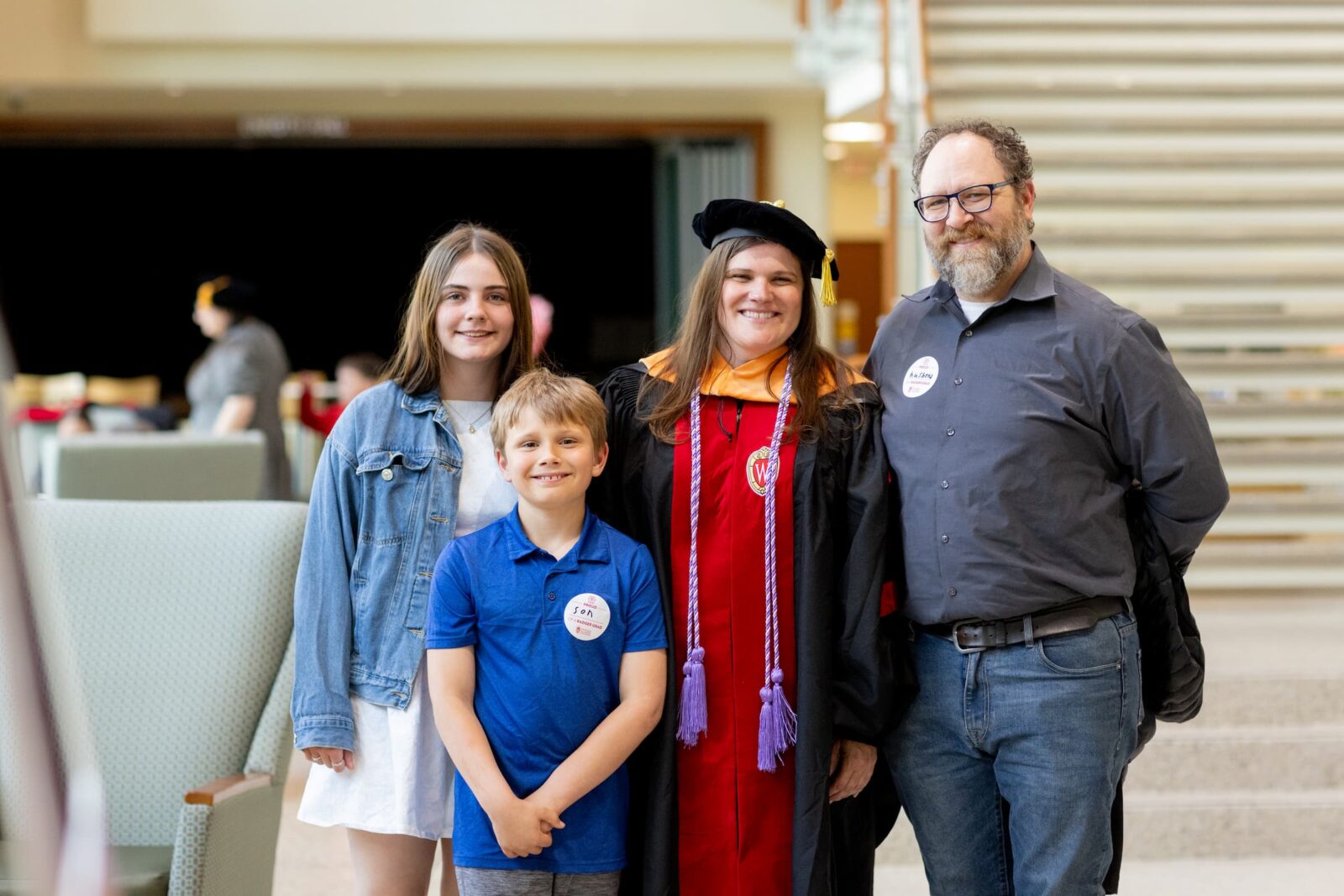
Our DNP students are working nurses with busy lives. They see problems with the health care system and are driven to make changes. You can lead the change you want to see! We are here to help you.
DNP Program and Career Outcomes
Our Doctor of Nursing Practice program is designed for nurses who aspire to practice at the highest clinical and leadership levels. Our students focus on applying evidence to improve systems, outcomes, and policies across diverse health care and community contexts.
DNP Program Outcomes
Our Doctor of Nursing Practice students are prepared to:
- Evaluate and apply research to innovate in practice
- Deliver advanced nursing care to diverse populations
- Design, implement, and evaluate clinical and population-based programs
- Inform and influence health policy
DNP Career Outcomes
Our Doctor of Nursing Practice graduates pursue advanced practice and leadership careers such as:
- Nurse practitioner (across four specialty areas)
- Nurse executive and advanced practice leader
- Clinical faculty and nurse educator
- Population health and systems leaders
- Leaders in nonprofit and health care organizations
Is the PhD or DNP program right for you?
Compare our graduate programs to help you determine which doctoral pathway best aligns with your professional goals and interests.
Frequently Asked Questions
The DNP degree includes everything in a master’s degree (role preparation) and more:
- Evidence-based practice = you will have the ability to review new research, evaluate if it is good research, and then determine what this means for your patient care and for the practices of your entire agency
- Leadership = you will be prepared to take leadership roles in nursing and health care.
- Policy = you will be able to influence health care policy decisions at your organization and government policies at the local, state, and federal level.
No. We have a Clinical Placement Unit (CPU) that will work with you to secure placements in your relevant population area, and the CPU will ensure that you obtain the necessary number of clinical hours for certification and graduation. CPU does its best to honor student requests to complete clinicals near their home community or at another site of interest.
CPU saves our students time and stress of searching for clinical placements on their own.
We do not have an official transfer pathway to our DNP Program.
Typically, students would follow our regular application process and be admitted to UW–Madison to begin our DNP program. Once you are admitted to the program, we would review your coursework to make a determination as to how many credits could be waived.
The maximum number of credits that a student can waive is 18 credits.
No. We admit once a year for the fall semester.
We use a comprehensive admissions process to identify the best candidates for admission to the program. Specifically, we look for evidence of your academic ability, potential for leadership, and understanding of the advanced practice role.
Most students who are able to demonstrate these skills and abilities are offered admissions.
For more information about our admissions process, go to our How to Apply page.
You will want to consider whether you plan to pursue the 3-year or 4-year program plan. We have had students on the 3-year plan work full time, but it takes careful time management. Most of our students work at least half-time regardless of what program plan they are following, and most students reduce their work hours when they begin their clinical placements.
We do not offer a family nurse practitioner track. Only our Psychiatric Mental Health DNP Track has the lifespan population focus.
Dual certification is not an option within our program. You must select one population focus at a time.
Explore Our DNP Program
Learn more about what makes our DNP program outstanding and the impact you can make at the highest level of nursing practice.
Attend an Info Session
November
-
November 12
DNP Request for Information
Graduate Programs
Contact Us
Graduate Admissions
Suite 1100 Signe Skott Cooper Hall
admissions@nursing.wisc.edu
608-263-5180